MyFox
 

Kockroach's Blog

by Kockroach from KCMO

Last Post 3 days, 2 hours Ago


Kockroach's posts about: News

See all posts with this tag


Page 1 of 1
Tired of seeing all those idiots wearing their pants around their knees?


NEW TRAINING FOR BRITCHES WEARING!!!!!
FUN AND EXCITING!!!
MAKES YOU WANT TO WEAR YOUR PANTS THE RIGHT WAY!!!!

1 Comment |  Add a Comment

AMSTETTEN, Austria (CNN) -- A 73-year-old man has confessed to holding his daughter captive in his home cellar for nearly 24 years and fathering seven children by her, Austrian police say.
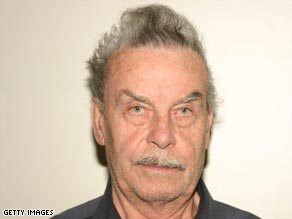
Austrian police spokesman Franz Polzer told CNN, the man, known as Mr. F., admitted holding his daughter hostage in a windowless cell in the basement of his home for more than two decades.

Mr. F. also told police that one of the children he fathered with his daughter Elisabeth F. was a twin who died.

Mr. F. also admitted he burned the body of the dead child in an oven, according to Polzer.

Further DNA tests will now be carried out to confirm fatherhood, Polzer said.

Elisabeth F., 42, is described as "very disturbed" and having trouble talking to police about her ordeal, reports CNN correspondent Fred Pleitgen.

She went missing in 1984, when she was 18 years old, police said at a news conference Sunday.

The situation came to light earlier this month after her daughter -- a 19-year-old woman, identified as Kristen F. -- was hospitalized in Amstetten after falling unconscious, according to police.

She was admitted to a hospital in Amstetten, outside Vienna, by her grandfather with a note from her biological mother requesting help. Amstetten is a rural town about 150 km (93 miles) west of Vienna.

But police said a DNA test later revealed her grandfather, Mr. F., was also her father, according to ORF, Austria's state-run news agency.

That sparked a police investigation, which revealed that Mr. F. may have fathered at least six children with his daughter, forcing her and three of the surviving children to live in the cellar of his house, according to ORF's Peter Schmitzberger.

The children are now between 5 and 19 years old.

Polzer told ORF that the 73-year-old led police to several hidden rooms in his cellar accessible only by an electronic passcode that he provided to police. Video Watch a report on the discovery ยป

On Sunday, police searched the hidden rooms where Mr. F. admitted he kept his daughter and their children, Polzer told ORF.

The rooms included sleeping quarters, a kitchen and a bathroom, which Mr. F. told police he built, Polzer said.

Conditions in the 50-60 square meters cellar were described as "very dark, narrow and damp, " reports Pleitgen.

Kerstin, 19; Stefan, 18; and Felix, 5, remained locked in the basement with their mother, according to police. None had seen the light of day during their entire time in captivity, she told police.

Shocked residents of the neighborhood -- a tidy, middle-class district of homes -- said there were no indications of the horrors taking place in the house.

The suspect "was friendly -- that's why this is so unbelievable," said Franz Redl, 56, who owns a shop across the street. "I'm sure the authorities did all they could. He planned everything so perfectly," he told The Associated Press.

While a woman identified as Gabriele H. told Austria's Kurier newspaper she thought Mr. F. was a devoted grandfather doing his best to look after his abandoned grandchildren.

"One who looks after their grandchildren whilst their mother just ran away. We were all asking ourselves what kind of mother would do that to their children?," she said.

Another local, Berhard E , who lives opposite the family, told Kurier: "I am appalled, this is unimaginable and simply not comprehensible."

Mr. F. and I grew up together" said Erika Manhalter who lives a few meters away from their house. "We thought this would be a family just like others, but you cannot look through people," she told Kurier.

News of the cellar captivity case has also prompted much soul searching in a country still reeling from the 2006 case of teenager Natascha Kampusch, who was kidnapped and imprisoned in a basement cell outside Vienna.

Kampusch was 10 years old when she was kidnapped in Vienna on her way to school in March 1998. She was held for more than eight years by Wolfgang Priklopil, who later killed himself when Natascha escaped.

"How is it possible that no one has ever heard or seen anything?" Der Standard newspaper asked.

"What does it say about the neighbors, relatives, family and friends, but also those who had to deal officially with the family? How could he have been successful keeping people fooled?"

"The entire nation must ask itself just what is fundamentally going wrong," the paper said in a commentary.

Amstetten police say they apprehended Mr. F. and Elisabeth F. on Saturday near the hospital for questioning, after receiving a "confidential tip." Once police assured the daughter that she would never have contact with her father again, "she was able to tell the whole story," Schmitzberger said.

Mr. F. lived upstairs with his wife, Rosemarie F., who police said had no idea about her husband's other family living in the cellar.

Mr. F. and Rosemarie F. had adopted three of the children that he had with his daughter, according to police. He told his wife that his missing daughter had dropped the unwanted children off at the house because she could not take care of them, police said.

After she was detained Saturday, Elisabeth F. gave police a "psychologically and physically disturbed impression," police said in a statement.

She said her father began sexually abusing her at age 11. On August 8, 1984 -- weeks before she was reported missing -- her father enticed her into the basement, where he drugged her, put her in handcuffs and locked her in a room, she told police. For the next 24 years, she was constantly raped by her father, resulting in the six surviving children, she said, according to the police statement.

She also told police she gave birth to twins in 1996, but one of the babies died a few days later as a result of neglect, and Mr. F. removed the infant's body and burned it.

She told police that only her father supplied her and her children with food and clothing, and that she did not think his wife knew anything about their situation.

When Kerstin fell ill earlier this month, Mr. F. apparently told his wife and the hospital that his "missing" daughter had dropped off the sick girl on his doorstep.

In an effort to find out what might be ailing 19-year-old Kerstin, the hospital asked the media to put out a bulletin requesting any information about the girl or her missing mother, attorney general Gerhard Sedlacek told NTV.

Sometime later, Mr. F. brought Elisabeth F. out of the cellar, telling his wife that she had returned home with her two children after a 24-year absence, police said. He took Elisabeth F. to the hospital to talk with doctors about Kerstin's condition, and at that point, authorities became aware of her situation, Sedlacek said.


3 Comments |  Add a Comment

This woman got exactly what she deserved. She openly disobeyed the officer numerous times. I don't get why some people think they are above the law.
http://clipground.com/play.php?vid=280
14 Comments |  Add a Comment

Authorities are considering federal charges against a passenger who became belligerent aboard a flight from Hong Kong.

By SALVADOR HERNANDEZ
The Orange County Register

Passengers and crew members aboard a flight from Hong Kong used duct tape to restrain an Orange County man after he allegedly became belligerent aboard a plane headed to Los Angeles on Wednesday, authorities said.

FBI agents took the man into custody when the United Airlines flight from Hong Kong landed at Los Angeles International Airport just after 10 a.m., said Laura Eimiller, spokeswoman for the FBI.

The man, whose name has not been released, was taken into custody on suspicion of interfering with flight crew members, a federal offense. The FBI is consulting with the U.S. Attorney's office to review what charges, if any, will be pressed.

Authorities said the man became belligerent aboard the plane. When he didn't calm down, passengers and members of the plane's crew used duct tape to restrain him in his seat.

The U.S. Attorney's Office has been in contact with the FBI but has not yet received the case, said Thom Mrozek, spokesman for the U.S. Attorney's Office in Los Angeles.

The man was released Wednesday.


3 Comments |  Add a Comment

Apr 16, 7:00 PM (ET)

By MARK SHERMAN


WASHINGTON (AP) - The longest pause in executions in the U.S. in 25 years is about to end. A splintered Supreme Court cleared the way Wednesday, approving the most widely used method of lethal injection.

Almost immediately, Virginia lifted its moratorium on the death penalty. Mississippi and Oklahoma said they would seek execution dates for convicted murderers, and other states were ready to follow.

A nearly seven-month halt in executions was brought on by the court's decision to review Kentucky's lethal injection procedures, which are similar to those in roughly three dozen states. The break is the longest since a 17-month period ending in August 1982.

Voting 7-2, the conservative court led by Chief Justice John Roberts rebuffed the latest assault on capital punishment, this time by foes focusing on methods rather than on the legality of the death penalty itself. Justice John Paul Stevens voted with the majority on the question of lethal injections but said for the first time that he now believes the death penalty is unconstitutional.

The court turned back a challenge to the Kentucky procedures that employ three drugs to sedate, paralyze and kill inmates. Similar methods are used by roughly three dozen states.

Death penalty opponents said challenges to lethal injections would continue in states where problems with administering the drugs are well documented.

The case decided Wednesday was not about the constitutionality of the death penalty generally or even lethal injection. Instead, two Kentucky death row inmates contended that their executions could be carried out more humanely, with less risk of pain.

The inmates "have not carried their burden of showing that the risk of pain from maladministration of a concededly humane lethal injection protocol, and the failure to adopt untried and untested alternatives, constitute cruel and unusual punishment," Chief Justice John Roberts said in an opinion that garnered only three votes. Four other justices, however, agreed with the outcome.

Roberts also suggested that the court will not halt scheduled executions in the future unless "the condemned prisoner establishes that the state's lethal injection protocol creates a demonstrated risk of severe pain."

States can avoid this risk by using the three-drug procedure approved in the Kentucky case, Roberts said.

Justices Ruth Bader Ginsburg and David Souter dissented.

Executions have been on hold since September, when the court agreed to hear the Kentucky case. The justices stepped in to halt six executions, and many others were put off because of the high court's review.

Forty-two people were executed last year out of more than 3,300 people on death rows across the country.

Wednesday's decision was announced with Pope Benedict XVI, a prominent death penalty critic, in Washington and the court's five Catholic justices - Roberts, Samuel Alito, Anthony Kennedy, Antonin Scalia and Clarence Thomas - headed to the White House for a dinner in his honor. All five supported the lethal injection procedures.

The court separately heard arguments Wednesday on the constitutionality of the death penalty for people convicted of raping children. A decision in that case is expected by late June.

The argument against the three-drug protocol is that if the initial anesthetic does not take hold, the other two drugs can cause excruciating pain. One of those drugs, a paralytic, would render the prisoner unable to express his discomfort.

The Kentucky inmates wanted the court to order a switch to a single drug, a barbiturate, that causes no pain and can be given in a large enough dose to cause death.

At the very least, they said, the state should be required to impose tighter controls on the three-drug process to ensure that the anesthetic is given properly.

Ginsburg, in her dissent, said her colleagues should have asked Kentucky courts to consider whether the state includes adequate safeguards to ensure a prisoner is unconscious and thus unlikely to suffer severe pain.

Stevens, while agreeing with Wednesday's outcome, said the decision would not end the debate over lethal injection.

"I am now convinced that this case will generate debate not only about the constitutionality of the three-drug protocol, and specifically about the justification for the use of the paralytic agent, pancuronium bromide, but also about the justification for the death penalty itself," Stevens said in an opinion in which he said for the first time that he believes the death penalty is unconstitutional.

Stevens suggested that states could spare themselves legal costs and delays in executions by eliminating the use of the paralytic.

Kentucky has had only one execution by lethal injection, and it did not present any obvious problems, both sides in the case agreed.

But executions elsewhere, in Florida and Ohio, took much longer than usual, with strong indications that the prisoners suffered severe pain in the process. Workers had trouble inserting the intravenous lines that are used to deliver the drugs.

Roberts said "a condemned prisoner cannot successfully challenge a state's method of execution merely by showing a slightly or marginally safer alternative."

He acknowledged that Wednesday's outcome would not prevent states from adopting a method of execution they consider more humane. Alito and Kennedy joined his opinion.

Justice Stephen Breyer concurred in the outcome, although he said he would evaluate the case under the same standard put forth by Ginsburg, that a means of execution may not create an "untoward, readily avoidable risk of inflicting severe and unnecessary pain."

Scalia and Thomas said Roberts' opinion did not go far enough in insulating states from challenges to their lethal injection procedures, which were instituted to make executions more humane. A "method of execution violates the Eighth Amendment only if it is deliberately designed to inflict pain," Thomas said.

Donald Verrilli, a veteran death penalty lawyer who argued the inmates' case, said he was disappointed in the decision, but hopeful about other challenges. "I think important issues remain after this decision," Verrilli said. "Records of administration of lethal injections in other states raise grave doubts about the reliability of those procedures."

The Rev. Pat Delahanty, head of the Kentucky Coalition to Abolish the Death Penalty, said the ruling wasn't a surprise.

"We never expected it to do more than maybe slow down executions in Kentucky or elsewhere," Delahanty said. "We're going to be facing some executions soon."

Wednesday's case involved two inmates, Ralph Baze and Thomas Clyde Bowling Jr., who were convicted of murder and sentenced to death by juries in Kentucky. Baze killed a sheriff and a deputy who were attempting to arrest him. Bowling shot and killed a couple and wounded their 2-year-old son outside their dry-cleaning business.

Fayette County Commonwealth Attorney Ray Larson, who prosecuted Bowling in 1992, said after the ruling: "Fact of the matter is, this lethal injection process is about as far from cruel and unusual as anything you can imagine. This is just another one of those things the anti-death penalty gang is throwing against the wall to see what sticks."

The case is Baze v. Ress, 07-5439.


15 Comments |  Add a Comment

Continue Reading Kockroach's Blog
Page 1 of 1


Kockroach

I am Kockroach. ~~~~~~//o\\ "Satire is a lesson, parody is a game." ~~~Vladimir Nabokov

Member Since: 4/15/2008